Your children will change and growth will occur very quickly during their early years. You will be amazed by how much they grow from ages one and two, and three and four, and so on. There might be another thing that shocks you, and that is perceived regression. You may notice that your child enjoys something one day, and then a little while later, they no longer love it and are even terrified by it. This happened a few times with my own son. For instance, he loved going down slides, then all of a sudden didn’t want to go near them. Before, he had no issues sitting on a bicycle but then started running away when seeing one.
This may cause much confusion for parents. It certainly did for me. These moments can feel like things are going in reverse and all of the progress made has already been lost. The truth is that it hasn’t. Child development is not linear. Their brains develop incredibly fast and as a result, they are testing new sensations, building emotional associations, developing awareness of safety and risk, and constantly evaluating the world around them. Why did your child suddenly become afraid of the slide? He or she may have realized the rapid speeds at which they travel down them. Why does your child no longer want to sit on their bike? They may have realized the risk associated with falling off of one. What can appear like inconsistency may likely be active processing.
A child can happily engage in certain activities one day and then be petrified the next. Nothing externally changed, but something inside of them did. A new fear is not regression, per se, but an increase in awareness, which is a good thing. It’s good that your kiddo becomes aware that specific activities pose certain risks. Early development does not move in a straight line, but rather, in waves with peaks and valleys. You won’t always understand it but realize it isn’t necessarily a negative thing.
Give your child time and space to better understand what is happening. Let them play and explore things at their own comfort level but observe them closely. If you force an issue, it usually makes resistance to an activity stronger. As parents, rather than force consistency, we should stay steady and be ready to provide support when needed.
All that being said, I’m no expert on this subject. If you are legitimately concerned about developmental issues that your child has, don’t hesitate to seek out a professional. Generally, this would be your pediatrician who can make other recommendations.

Some parents believe that development will look like this.
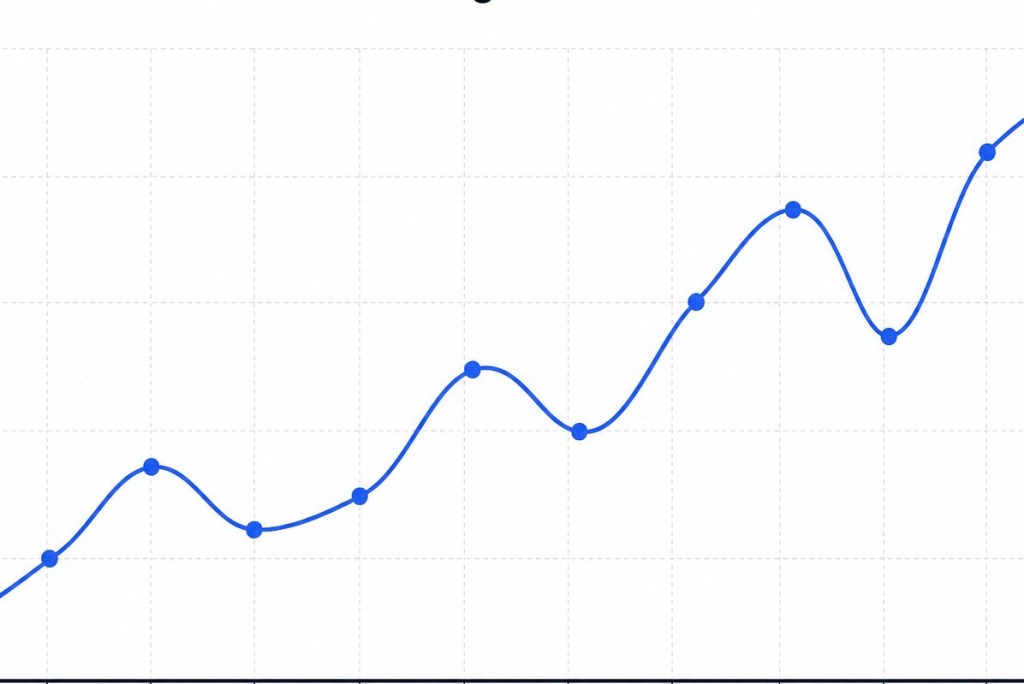
But it can often feel like this.
 New Dad Series
Leave a comment